
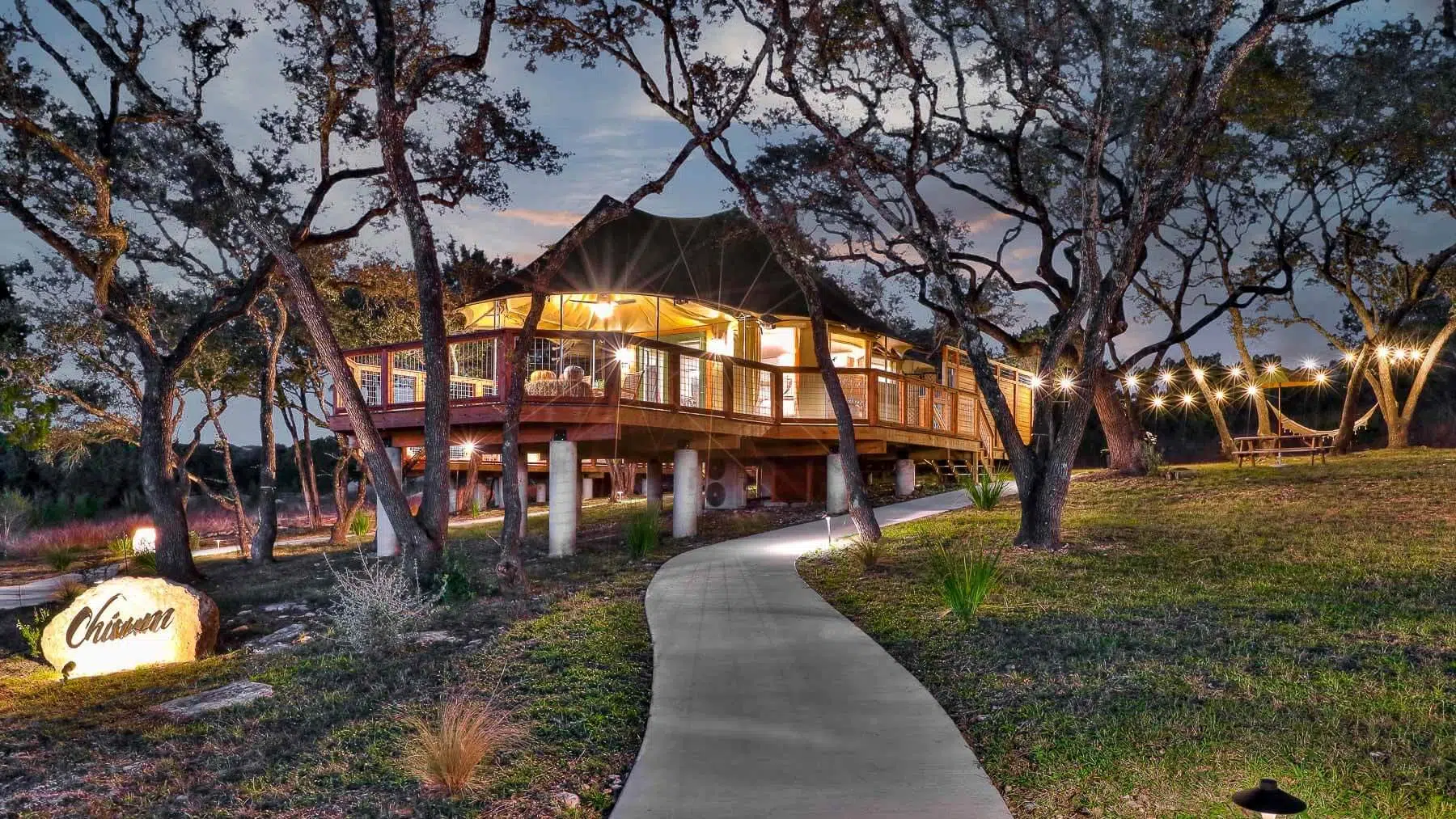
Written by Ken & Yvette, Owners of Spoon Mountain Glamping | Luxury Glamping Retreat, Wimberley, TX | Updated July 2026
This guide is written from direct experience. We own and operate Spoon Mountain Glamping in Wimberley and have checked in more couples than we can count. Guests constantly ask us where else to go near Austin, so this is the list we actually give them—sorted by the season each stay does its best work in, with real drive times and honest trade-offs. Disclosure: Spoon Mountain Glamping is our own property and appears on this list; we’ve included it because we know it best, but judge it on its merits alongside the rest. Prices reflect our best knowledge as of July 2026 and shift with demand and season. We update this guide periodically as things change on the ground.
We’ve checked in more couples than we can count at our own hilltop property outside Wimberley, and the question we hear most often is some version of “where else should we go for romantic weekend getaways near Austin while we’re in the area?”
So we put together the list that we actually give our guests.
These are the ten romantic weekend getaways near Austin that consistently earn repeat bookings, sorted by the season each one does its best work in, with real drive times, real price ranges, and the honest trade-offs nobody else mentions.
Some of these are ours. Most aren’t. We’re not interested in padding this list with filler just to hit a round number, so every stay here made the cut because it does one specific thing better than the rest of the field.
Who This Romantic Weekend Getaways Near Austin Guide Is For

Not every couple wants the same weekend, and we’ve learned to ask a few questions before recommending a stay.
Here’s who we typically point toward this list of Romantic Weekend Getaways Near Austin Texas for couples:
- Couples planning an anniversary who want somewhere that feels intentional, not generic
- Partners are squeezing in a last-minute weekend getaway from Austin between work obligations
- Anyone hunting for cheap Romantic Weekend Getaways Near Austin that still feel special
- Couples who want a splurge weekend with a spa, a golf course, or a private pool
- Proposal planning, babymoons, or a honeymoon that doesn’t require a flight.
If you’re still in the planning phases, check out these stunning Proposal Spots Near Austin to pull off the perfect surprise before booking your stay.
If you fall into more than one of these, that’s normal. Most of our guests do.
Quick Comparison: 10 Romantic Weekend Getaways Near Austin
We built this table first because most couples want the numbers before the storytelling. Prices reflect typical nightly rates as of July 2026 and will shift with demand and season.
| Stay | Location | Drive from Austin | Price Range | Best For |
| Spoon Mountain Glamping | Wimberley | ~45 min | $300 to $500/night | Private, adults-only romance |
| The Yurtopian | Wimberley | ~50 min | $300 to $450/night | Stargazing and elevated views |
| Cypress Valley Treehouses | Spicewood | ~50 min | $350 to $600/night | Whimsical, storybook romance |
| Lucky Arrow Retreat | Dripping Springs | ~40 min | $250 to $400/night | Wine country weekends |
| Stay Onera Fredericksburg | Fredericksburg | ~1.5 to 2 hrs | $300 to $600/night | Architectural, one-of-a-kind stays |
| Lakeway Resort and Spa | Lake Travis | ~30 to 40 min | $250 to $450/night | Effortless lakefront luxury |
| Horseshoe Bay Resort | Lake LBJ | ~60 to 70 min | $220 to $500/night | Golf, marina, resort amenities |
| Signia by Hilton La Cantera | San Antonio area | ~1.5 hrs | $280 to $550/night | Full-service resort spa |
| The Ritz-Carlton Dallas, Las Colinas | Las Colinas | ~3 hrs | $350 to $700/night | Polished, extended weekend luxury |
| Green Acres | Elgin | ~35 min | $180 to $300/night | Casual, budget-friendly charm |
Winter Romantic Weekend Getaways Near Austin
Winter is our busiest season for a reason. Fire pits stop being decorative and start being the whole point of the evening, and Hill Country skies get sharper once the humidity drops.
1. Spoon Mountain Glamping, Wimberley: Best Winter Escape
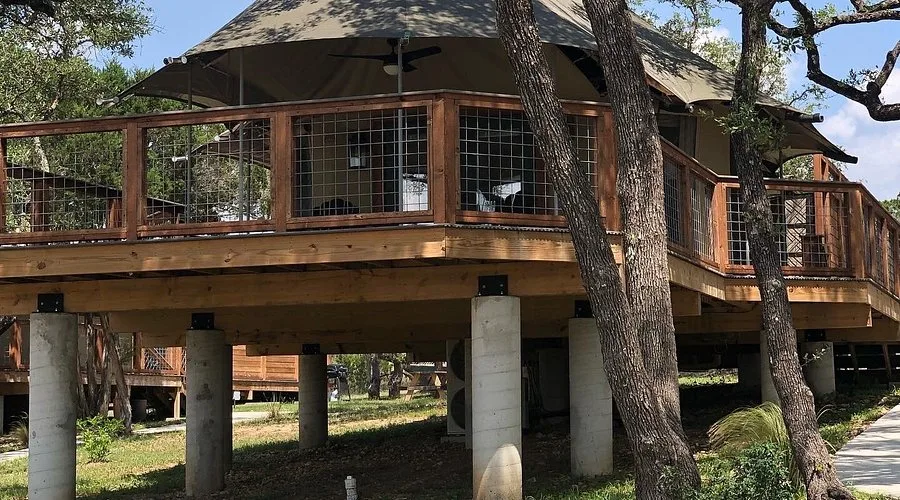
Spoon Mountain Glamping is our own property, so we’ll keep the pitch short.
We sit at 210 Masonic Lodge Rd, Wimberley, about 45 minutes and roughly 45 miles southwest of downtown Austin.
For a complete breakdown of travel times, route options, and traffic tips, read our full guide on How Far Is Wimberley From Austin?
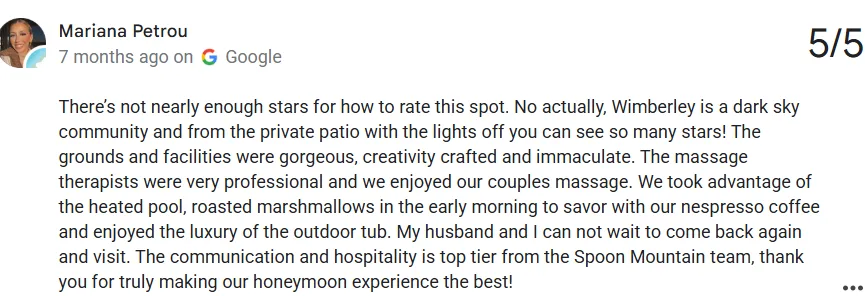
Check-in is 3:00 PM, check-out is 11:00 AM, and we hold a 4.9-star rating across more than 114 Google reviews.
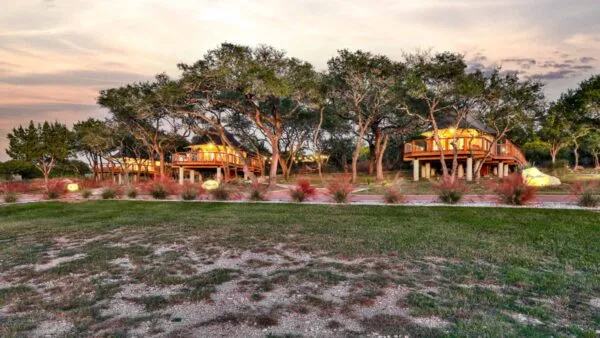
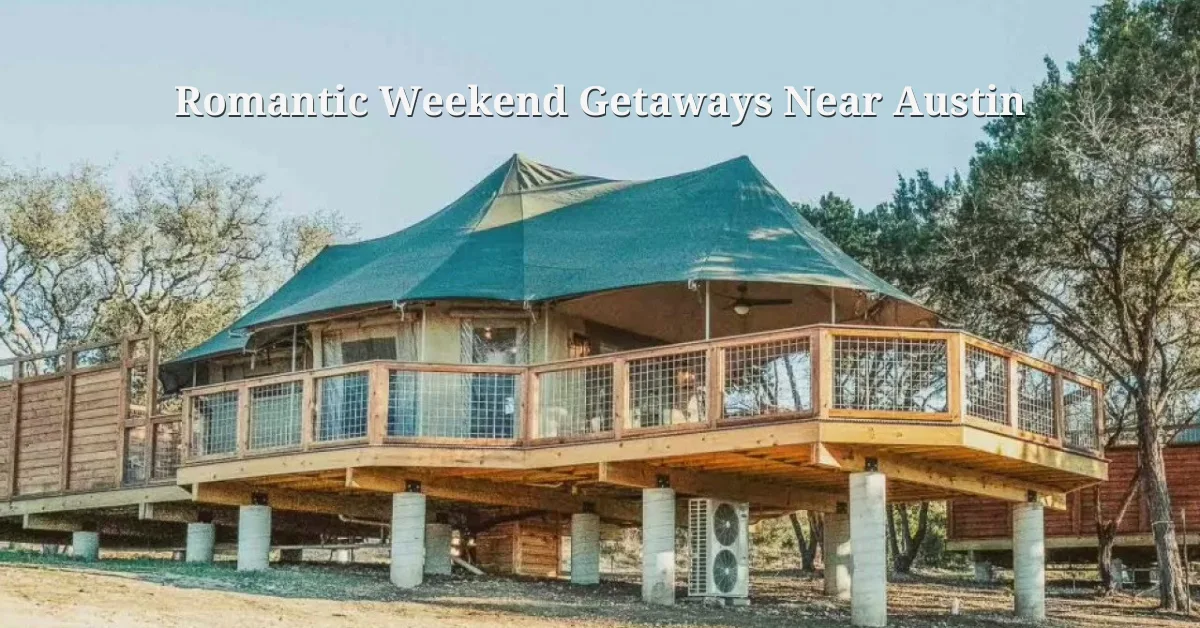
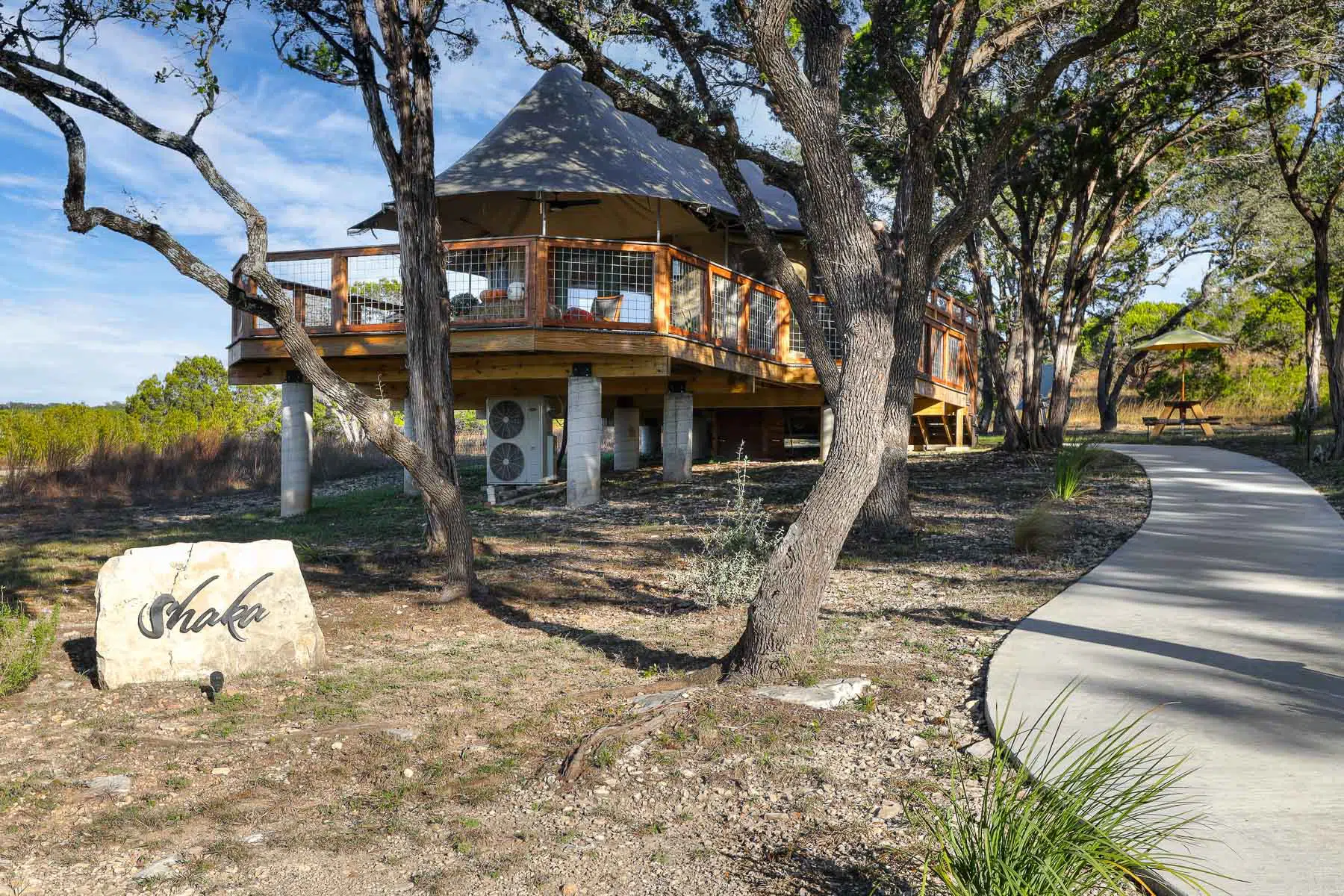
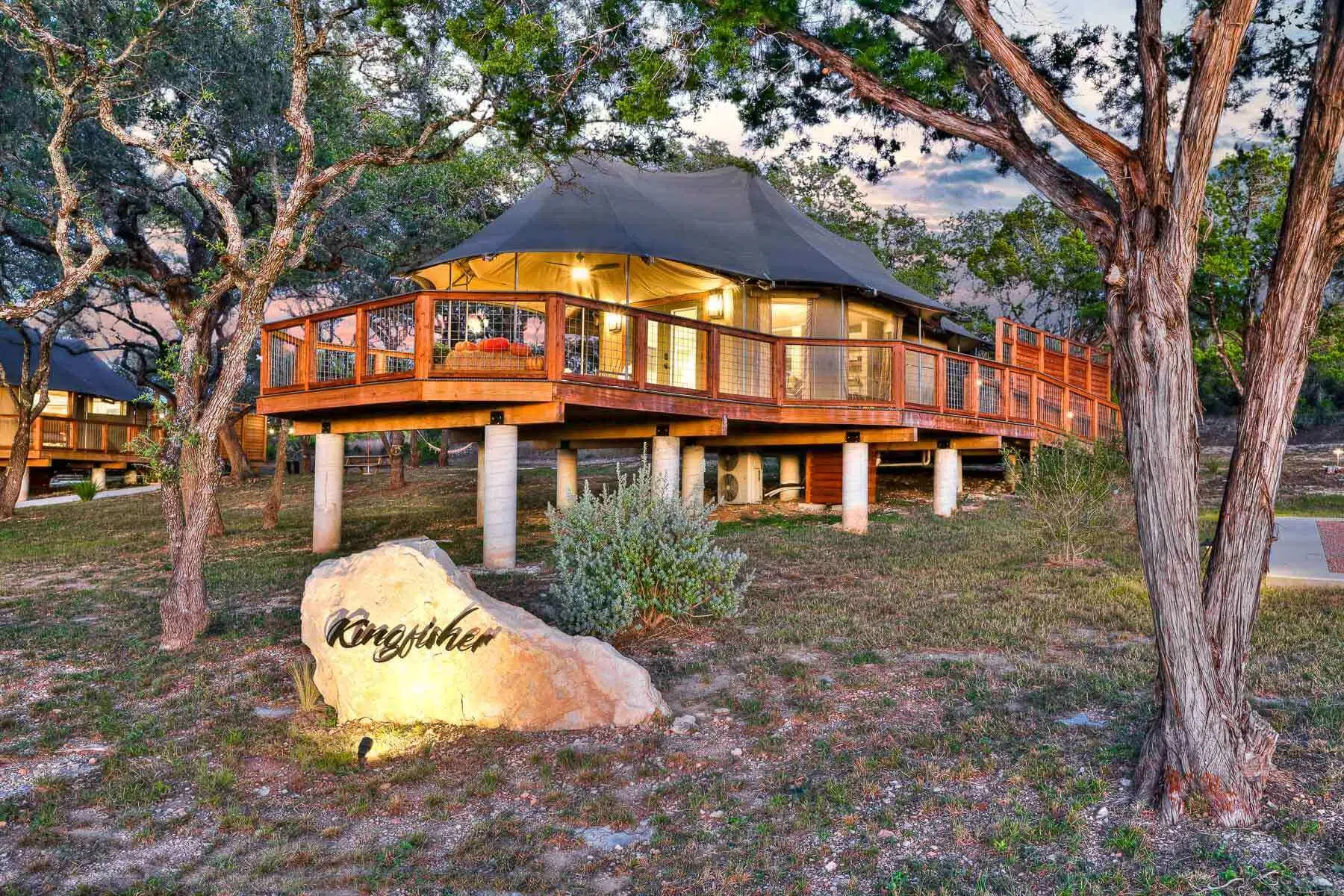
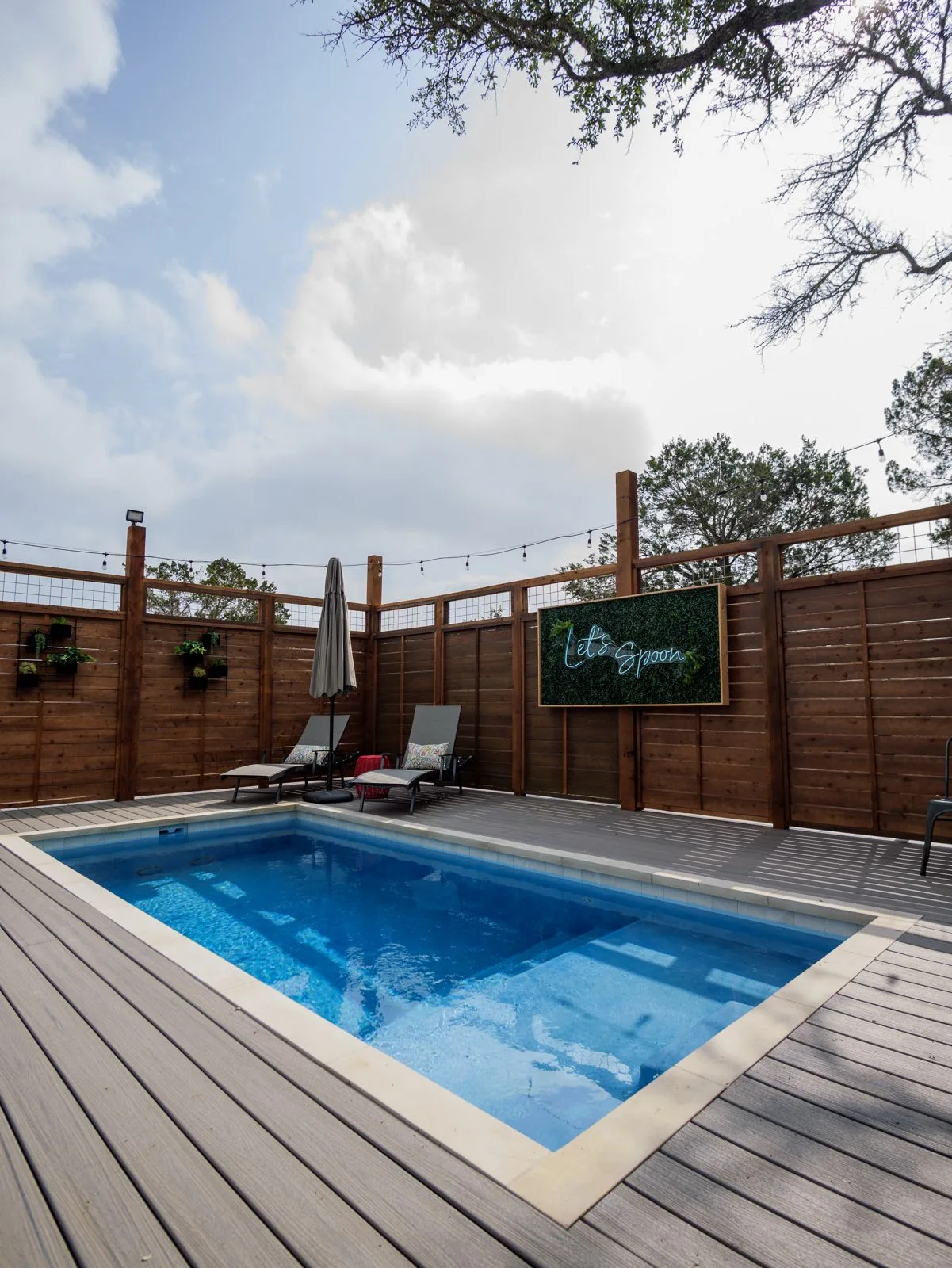
- Three safari-style tents (Shaka, Kingfisher, and Chisum), each with a private pool, a soaking tub for two, and a king bed
- Adults-only setting with Wifi, air conditioning and heat, a mini kitchenette, and outdoor games
- Winter add-ons couples request most: in-tent fireplaces, rose petal turndown, and a wine and charcuterie board built for two
- Nightly rates typically run $300 to $500, with premium package weekends reaching $1,200
Book direct through Spoon Mountain Glamping or call us at 737-227-0881 if you’d rather talk it through first.
What we tell our guests: ask about firewood before you arrive. Some properties in the area include it in the rate, and some charge extra, and nobody wants that conversation at 9 PM when the fire’s already half built.
A note from your hosts
Come stay with us at Spoon Mountain
Hi, we're Yvette & Ken. We built Spoon Mountain as a romantic hilltop escape 30 miles from Austin. Each of our three safari tents has a private pool, soaking tub for two, and king bed. Adults only. We'd love to host you.
2. The Yurtopian, Wimberley: For Stargazers
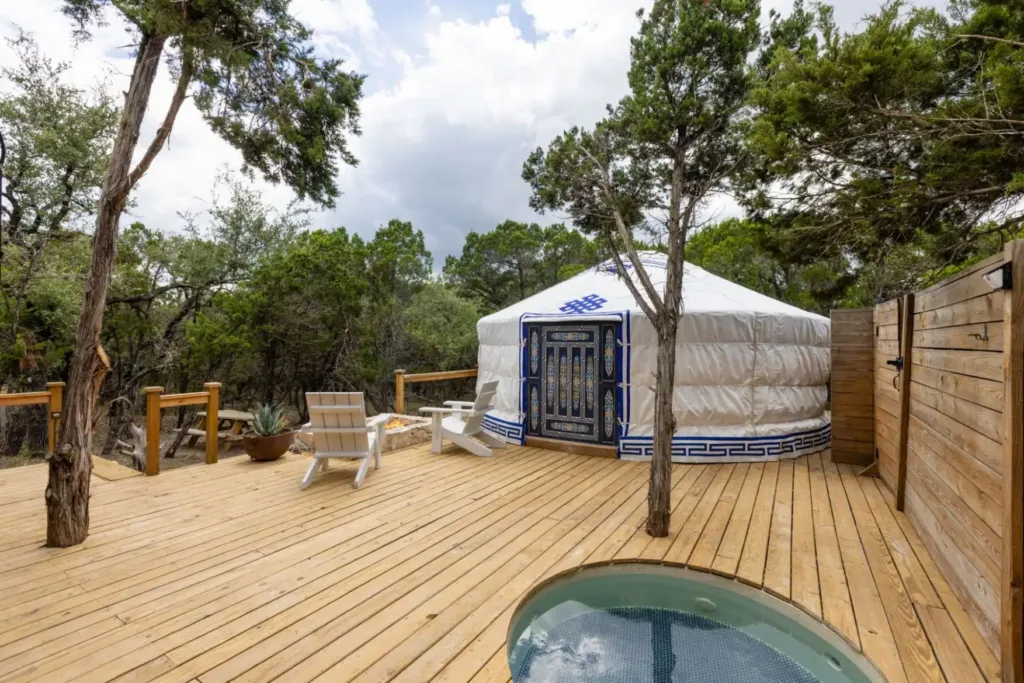
The Yurtopian sits at 135 Winn Ranch Rd, Wimberley, roughly 50 minutes from Austin.
- Circular yurts elevated for long, uninterrupted sightlines
- Private hot tubs beside each yurt, with fire pits positioned to block the wind
- Rooftop decks built specifically for stargazing, not just an afterthought
- Nightly rates land between $300 and $450
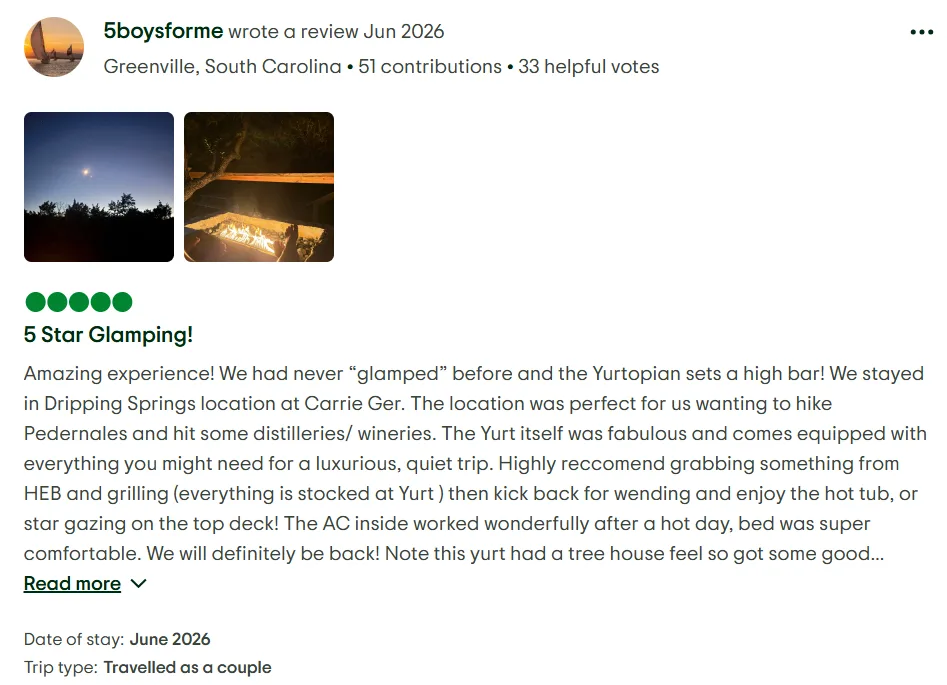
Travelers on TripAdvisor have awarded The Yurtopian Hill Country Resort a 4.8-star rating, highlighting its secluded yurts, scenic surroundings, and relaxing atmosphere
Local tip: book a yurt on the property’s higher ground if stargazing is the priority. Cold air carries sound and light differently up there, and the difference is noticeable once the sun’s fully down.
3. Cypress Valley Treehouses, Spicewood: Unique Winter Stay
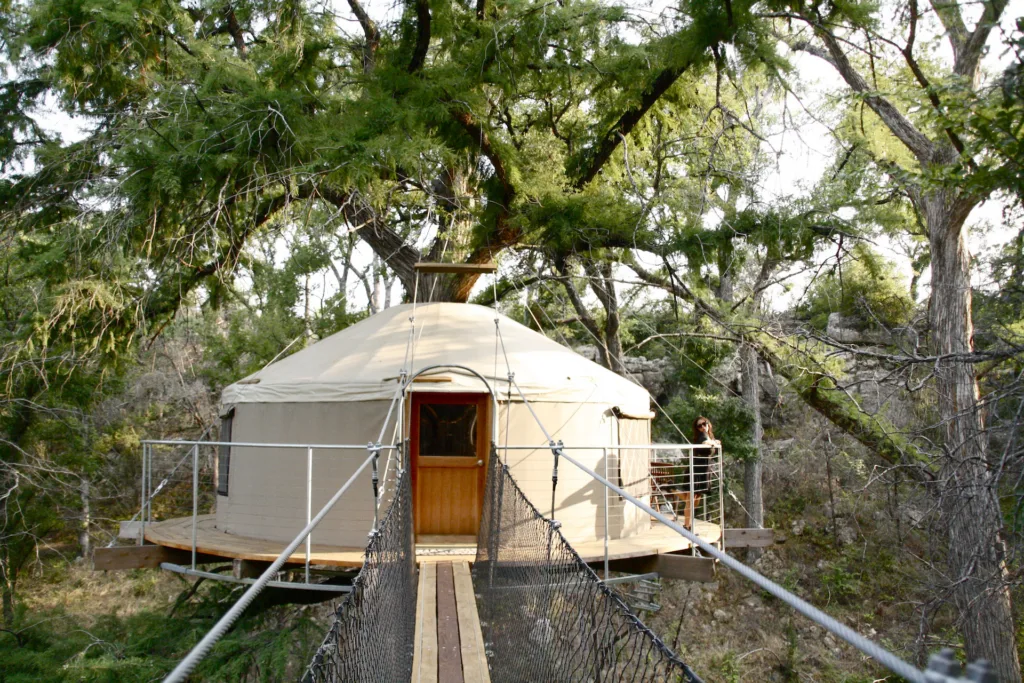
Cypress Valley sits at 1223 Paleface Ranch Rd S, Spicewood, about 50 minutes from Austin.
- Elevated treehouse suites with outdoor soaking tubs and forest views
- Winter strips back the tree canopy, opening sightlines that summer foliage blocks
- Nightly rates run from $350 to $600, depending on the treehouse
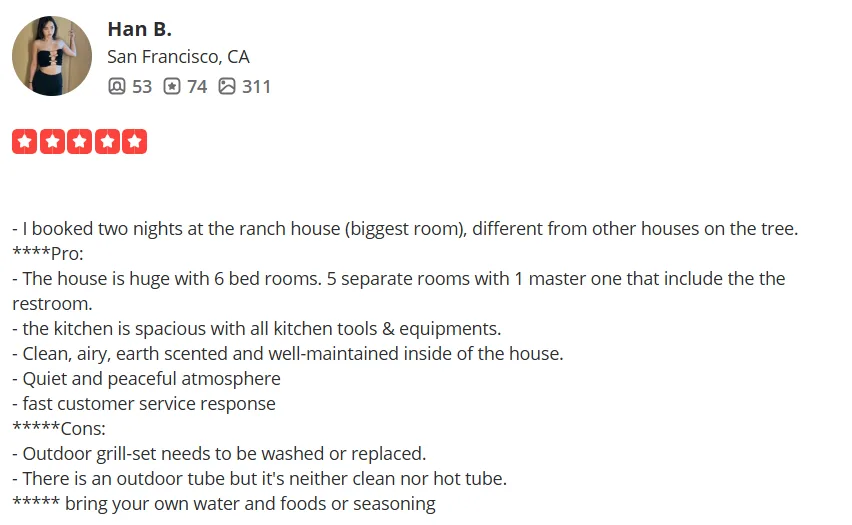
Yelp reviewers have given Cypress Valley Treehouses a 4.3-star rating across 100 reviews, praising its one-of-a-kind treehouse accommodations and memorable canopy experience.
What visitors often don’t realize: these are treehouses in the literal sense, meaning stairs, platforms, and some walking between your unit and the parking area.
If mobility is a concern for either of you, ask the property directly before booking.
Planning an anniversary? Read our Anniversary Getaways Near Austin guide.
Spring Romantic Weekend Getaways Near Austin
Spring turns the drive itself into part of the date. Bluebonnets take over the roadsides, and wineries reopen their patios after a quiet winter.
Spring Road Trips: Wildflower Drives Near Austin for Couples
Spring turns the drive itself into part of the date. From late March through mid-April, bluebonnets and Indian paintbrush take over the roadsides, and wineries reopen their patios after a quiet winter. For couples, the scenic route matters as much as the destination.
Best Wildflower Routes for a Spring Couples Drive
- Ranch Road 12 (Wimberley to San Marcos): rolling bluebonnet-lined curves that connect several of the stays on this list
- The Devil’s Backbone (RR-32): elevated Hill Country vistas between Wimberley and Blanco, especially striking at golden hour
- Willow City Loop (near Fredericksburg): one of Texas’s most famous wildflower drives during peak bloom—best on a weekday to avoid crowds
- US-290 wine corridor (Dripping Springs to Fredericksburg): pairs wildflower views with tasting-room stops along the way
4. Lucky Arrow Retreat, Dripping Springs: For Wine Lovers
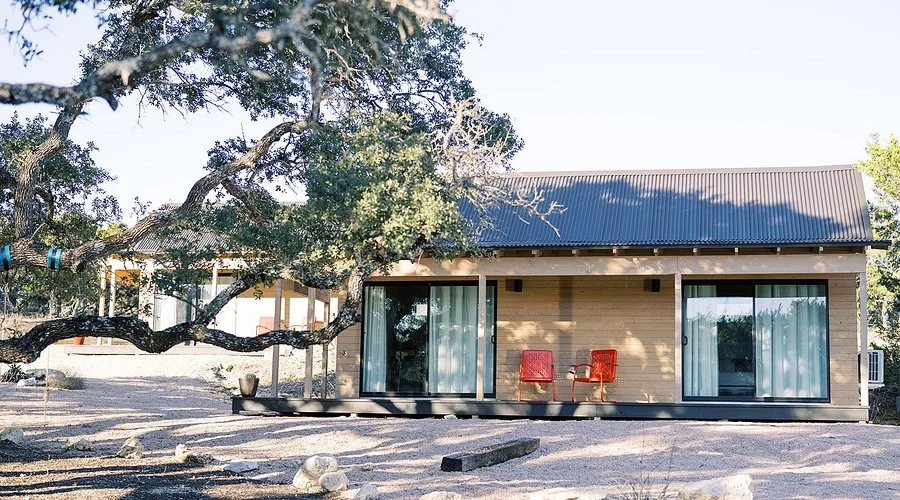
Lucky Arrow Retreat is at 3600 Bell Springs Rd, Dripping Springs, about 40 minutes from Austin.
- Hilltop yurts and modern cabins positioned close to Hill Country wineries
- A communal fire pit that leans social rather than strictly private
- Nightly rates between $250 and $400
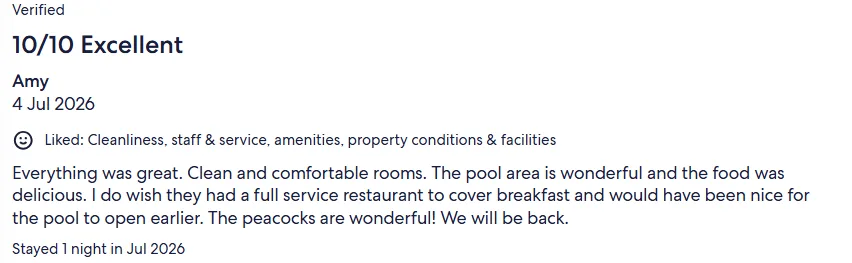
Verified Expedia guests have awarded Lucky Arrow Retreat an Exceptional 9.6/10 rating, reflecting consistently positive experiences with its cabins, yurts, and resort amenities.
Before you book: if privacy is the priority, ask specifically about cabin spacing. The communal fire pit is a draw for some couples and a dealbreaker for others, and it’s worth knowing which one you are before you arrive.
5. Stay Onera, Fredericksburg: Romantic Weekend Getaways Near Austin Texas for Couples Who Want Something Different
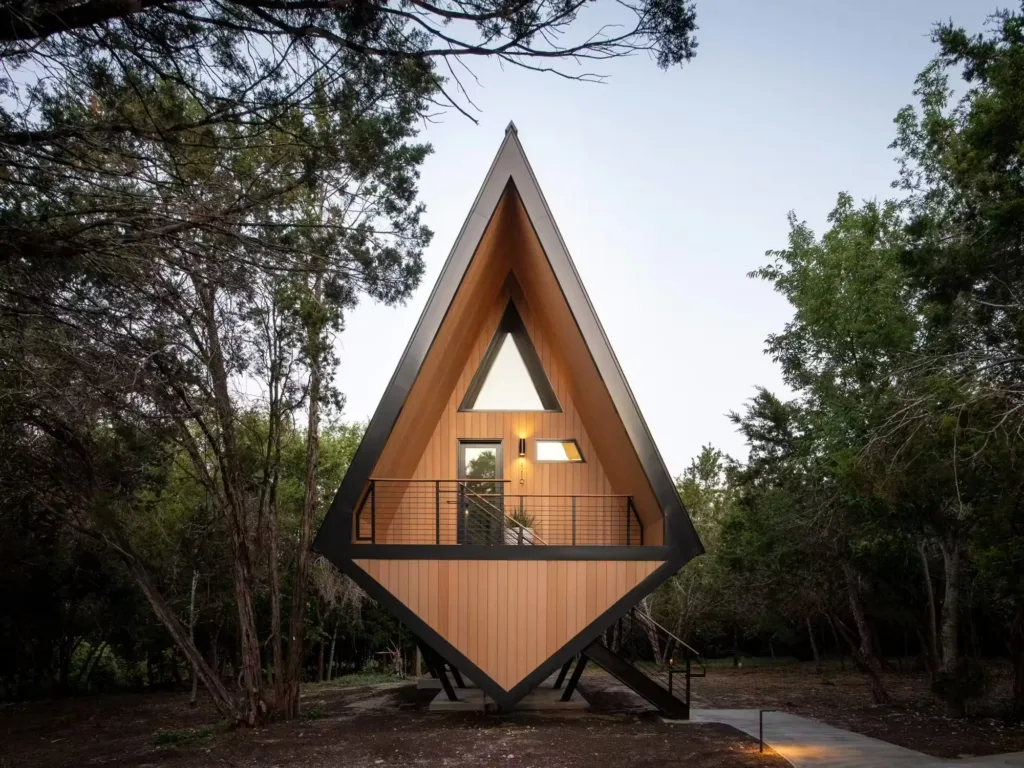
Stay Onera sits at 173 Basse Ln, Fredericksburg, roughly 90 miles and 1.5 to 2 hours from Austin, depending on traffic through Dripping Springs.
- Twelve architecturally distinct units across 13 acres, including geodesic domes, elevated treehouses, and container homes
- Several units, like the Cocoon and Spyglass Treehouse, include heated cedar soaking tubs
- The Monolith unit floats more than 30 feet above Barron’s Creek behind floor-to-ceiling glass
- Rates vary widely by unit, generally $300 to $600 a night
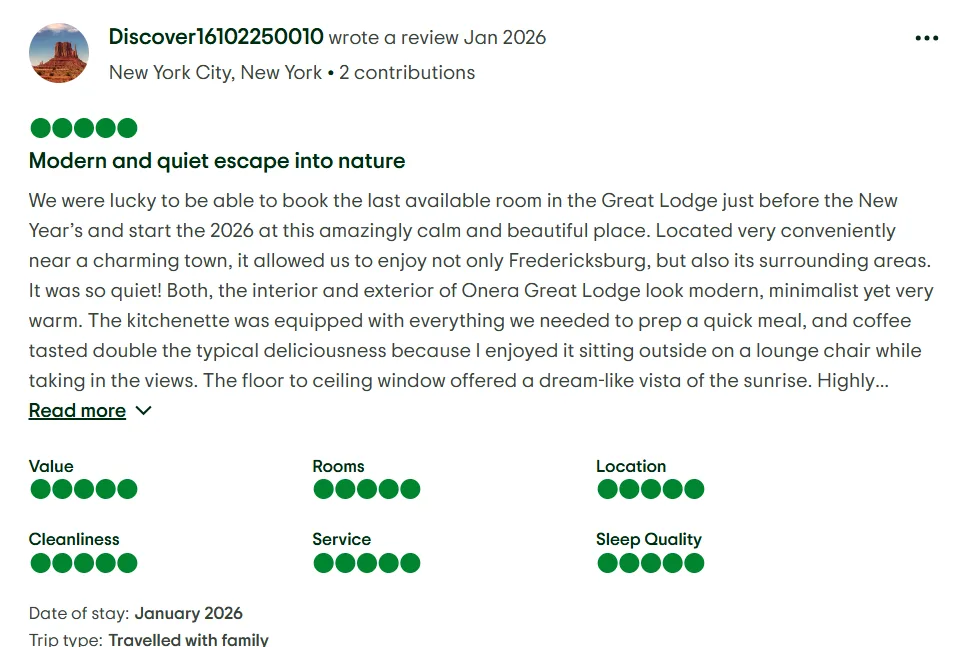
Stay Onera, Fredericksburg, holds an exceptional 4.7-star guest rating on TripAdvisor, based on 70-plus verified reviews, with guests frequently highlighting its unique accommodations and tranquil setting.
Worth the extra drive? Yes, if you want a stay that photographs like nothing else in the Hill Country. The extra 45 minutes past Wimberley buys you architecture you won’t find closer to Austin.
Looking for the perfect proposal location? Explore Proposal Spots Near Austin.
Summer Romantic Weekend Getaways Near Austin
Summer near Austin is about water and shade, full stop. These three stays put you close enough to a lake that cooling off never requires much planning.
6. Summer Romantic Weekend Getaways Near Austin
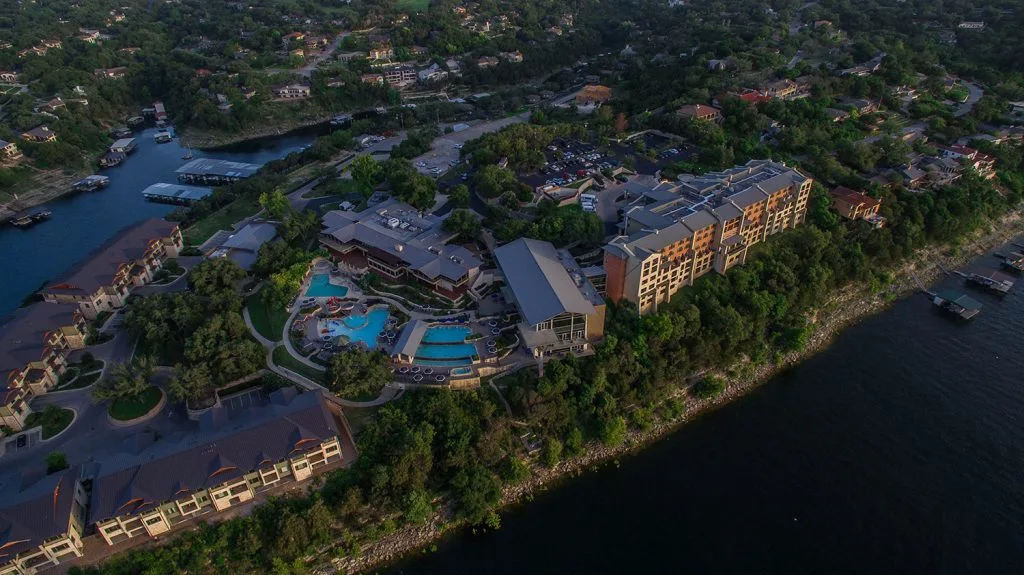
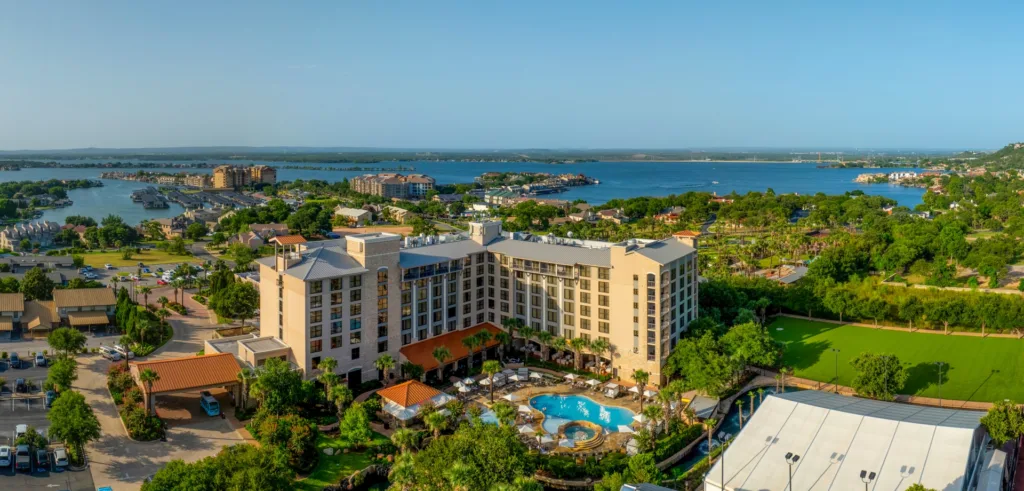
Lakeway Resort and Spa sits on 101 Lakeway Dr, Lakeway, directly on Lake Travis, about 30 to 40 minutes from downtown Austin.
- Rooms with private balconies overlooking the lake
- Full-service spa with couples’ massage and treatment packages
- An infinity-edge pool designed for sunset watching rather than lap swimming
- On-site dining built around seasonal Texas ingredients
- Nightly rates generally run $250 to $450
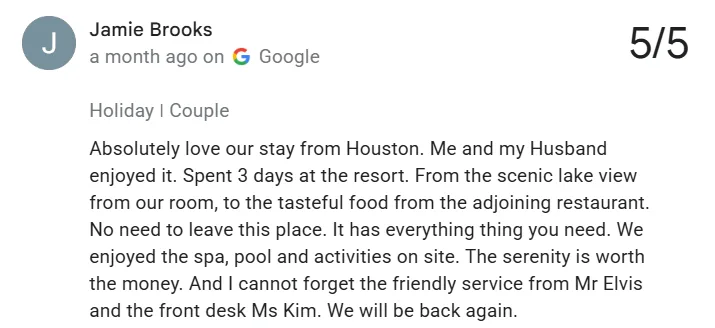
More than 7,300 travelers on Google have given Lakeway Resort & Spa a 4.6-star rating, recognizing its scenic Lake Travis location and family-friendly amenities.
Summer heat consideration: book a lake-facing room even if it costs more. The breeze off the water genuinely changes how the evenings feel once the sun drops, and it’s the detail most couples say made the trip.
7. Horseshoe Bay Resort, Lake LBJ: Golf & Marina Backdrop
Horseshoe Bay Resort sits at 200 Hi Cir N, Horseshoe Bay on Lake LBJ, about 60 to 70 minutes from Austin near Marble Falls.
- Three outdoor pools, four restaurants, and a full marina with boat rentals
- 36 holes across three championship golf courses
- Full-service spa and a private beach on the lake
- Rates start around $220 to $260 a night and climb toward $500 for suites and lake-view rooms during peak weekends
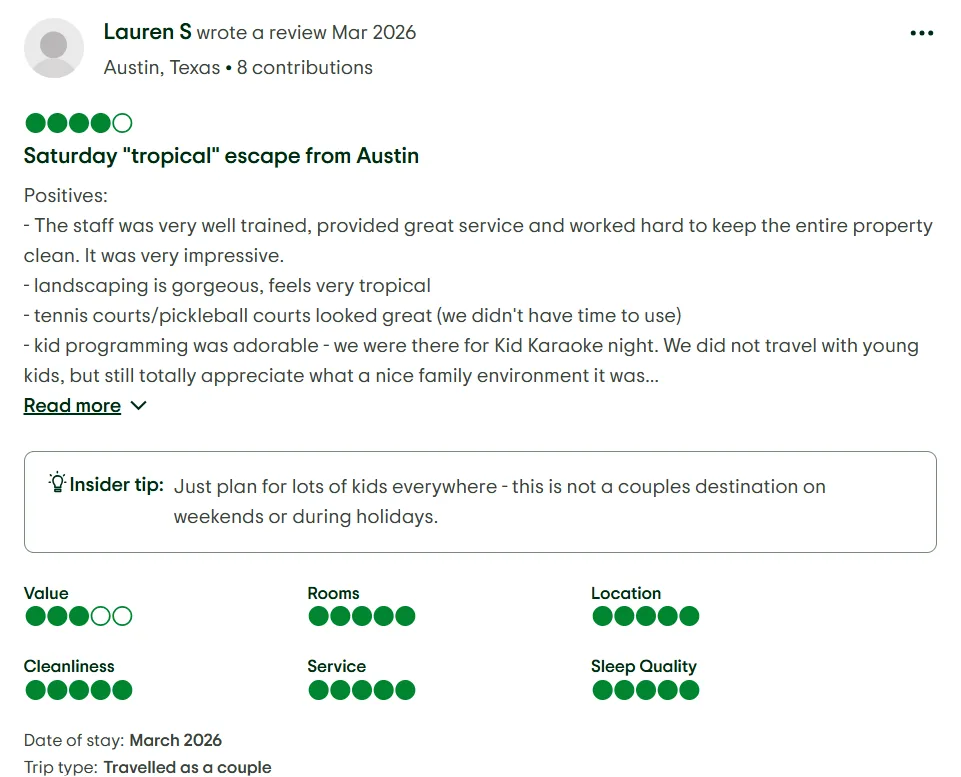
Guests have awarded Horseshoe Bay Resort a 4.1-star rating on TripAdvisor across more than 1,700 reviews, praising its lakeside setting, golf courses, and resort facilities.
Skip this if you’re after a quiet, adults-only escape. It’s genuinely one of the better options if golf is part of the weekend, or if you’re traveling with another couple.
8. Signia by Hilton La Cantera, San Antonio Area: Full Resort Weekend
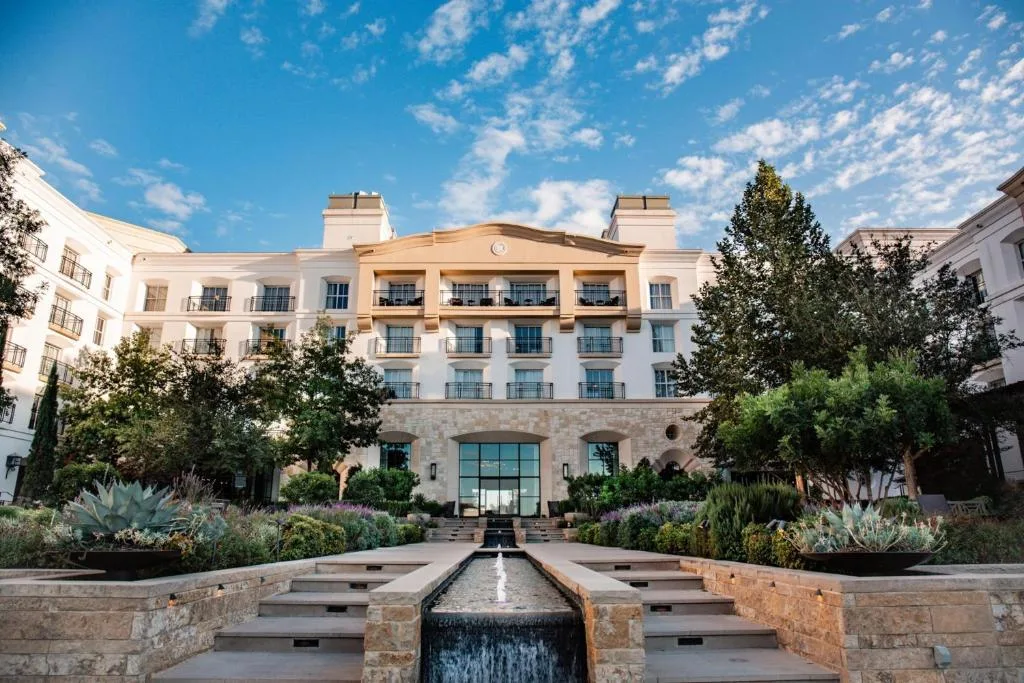
Signia by Hilton La Cantera sits on a hilltop at 16641 La Cantera Pkwy, San Antonio, about 1.5 hours from Austin, overlooking Hill Country terrain.
- Multiple on-site dining options, from casual bites to upscale Texas-inspired menus
- A full-service spa built for couples’ massages and slow mornings
- Adult-friendly pools alongside quieter lounging areas
- Nightly rates typically fall between $280 and $550
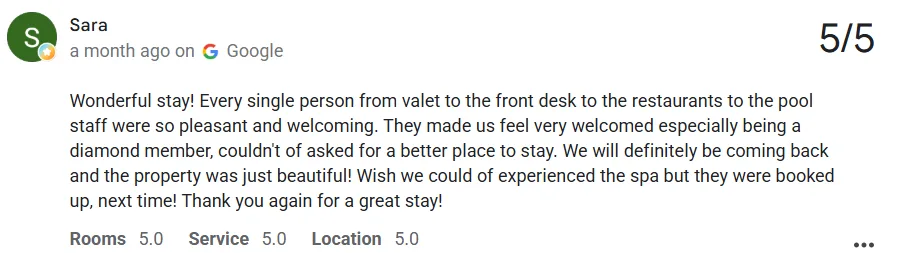
Signia by Hilton La Cantera has earned a 4.5-star rating on Google from more than 4,600 reviews, with visitors highlighting its upscale accommodations, golf, and Hill Country views.
The question we get asked most: Is it worth the extra hour past Wimberley or Dripping Springs?
For couples who want a full resort weekend with room service, a spa appointment already on the calendar, and zero driving once you check in, yes.
For couples chasing quiet and privacy, we’d point you back toward glamping instead.
Fall Romantic Weekend Getaways Near Austin
Fall brings cooler air, golden light, and the Hill Country’s best foliage. These two stays make the most of that shift, including one that’s worth planning as a longer trip.
9. The Ritz-Carlton Dallas, Las Colinas: For an Extended Fall Trip

The Ritz-Carlton Dallas, Las Colinas sits at 4150 N MacArthur Blvd, Irving, roughly three hours from Austin, which makes it less of a quick weekend and more of an intentional long weekend.
- Spacious rooms with golf course and waterfront views
- A destination spa focused on reconnection rather than quick treatments
- Multiple fine dining options and quiet resort-style pools
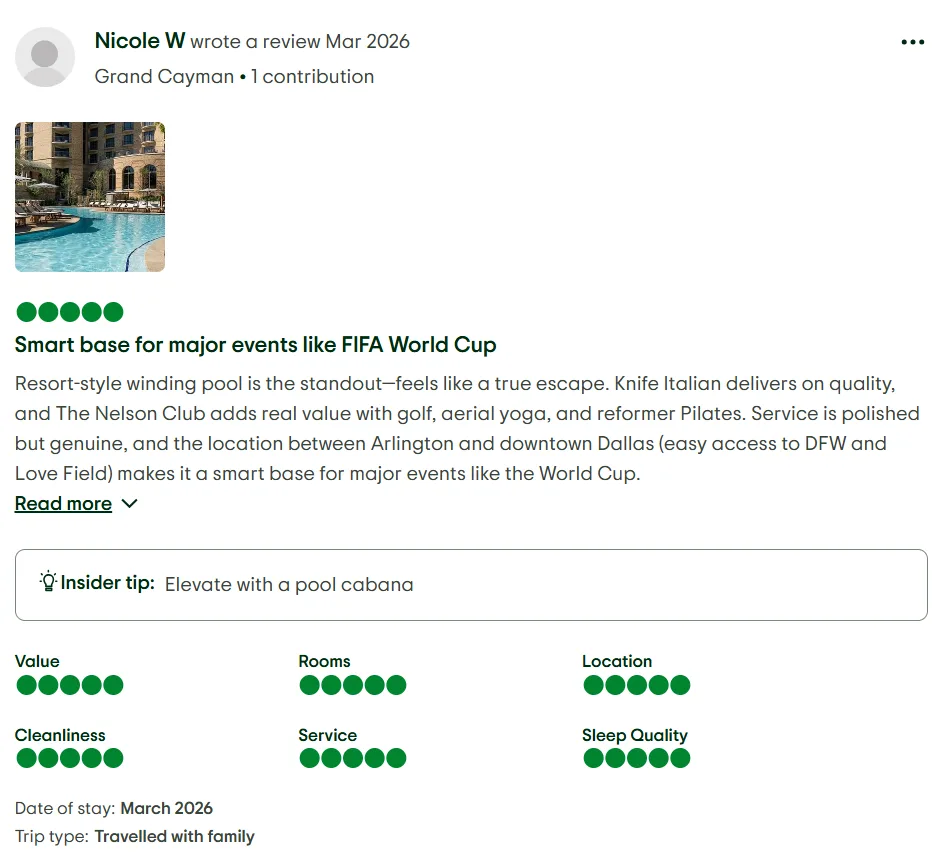
The Ritz-Carlton Dallas, Las Colinas has received a 4-star rating on TripAdvisor from more than 70 traveler reviews, reflecting its reputation for exceptional service and luxury amenities.
Before you book: three hours is a real drive, not a rounding error. We’d only recommend this one if you’re building a three or four-night trip around it, ideally pairing it with a stop in Georgetown on the way.
10. Green Acres, Elgin: Cheap & Casual Fall Escape
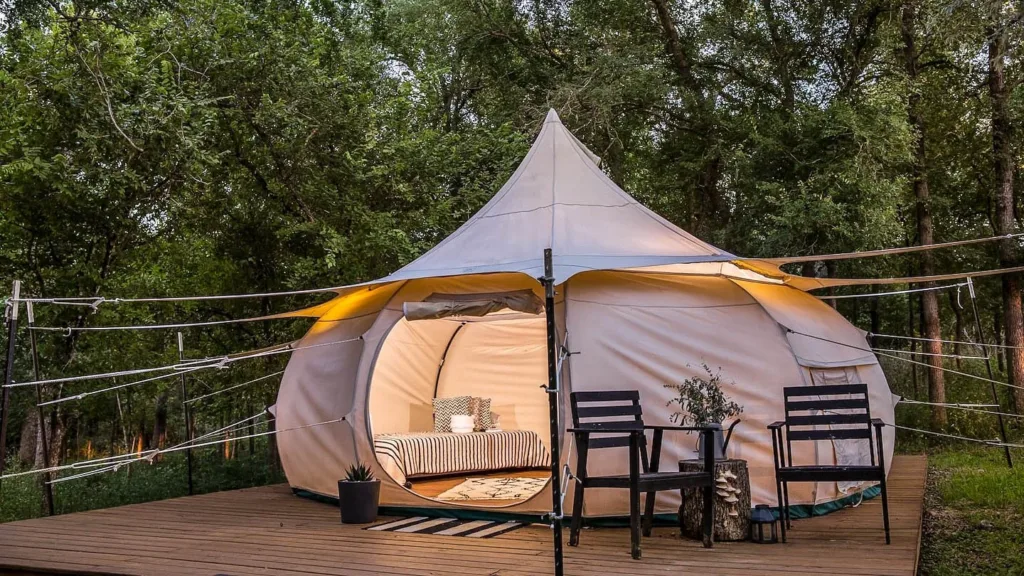
Green Acres sits at 2889 Farm to Market Rd 1704, Elgin, about 35 minutes from Austin, and holds a 4.6-star rating.
- Vintage trailers and yurts set among mature oak trees
- A shared fire pit that encourages conversation with other guests, rather than isolating you
- Fall foliage across the property’s oak canopy adds warmth to evening light
- Nightly rates run $180 to $300, making it one of the more affordable options on this list

Green Acres Glamping ATX has earned a 4.3-star rating on Google, with visitors praising its peaceful countryside setting, unique glamping accommodations, and relaxing escape just outside Austin.
Best for: couples who enjoy gentle social energy over strict privacy, and anyone looking for a genuinely cheap Romantic Weekend Getaways Near Austin option that still feels considered rather than bare-bones.
Camping & Glamping Near Austin for Couples
Our own glamping near Austin hilltop is the shortest drive on this list: 45 minutes from downtown with a private pool at every tent.
If you already know you want an outdoor escape, the stays below are the glamping-forward options on this list—close to Austin, private, and built for two. Glamping keeps the romance of sleeping under Hill Country skies while skipping the parts of traditional camping most couples don’t enjoy: no tent to pitch, no cooler to haul, real beds, climate control, and a private soaking tub instead of a shared campground shower.
- Spoon Mountain Glamping (Wimberley, ~45 min): adults-only safari tents, each with a private pool and soaking tub for two
- The Yurtopian (Wimberley, ~50 min): elevated yurts with private hot tubs and stargazing decks
- Cypress Valley Treehouses (Spicewood, ~50 min): canopy suites with outdoor tubs and forest views
- Green Acres (Elgin, ~35 min): budget-friendly vintage trailers and yurts among the oaks
For couples deciding between roughing it and glamping, the short version is: glamping gives you the outdoors without the discomfort. If privacy and a real bed matter, it wins nearly every time.
Quiet Romantic Getaways Near Austin
Some couples want a lobby bar and a lazy river. Others want the opposite: no crowds, no shared decks, and nothing on the schedule. If a truly quiet, private escape is the goal, a few of the stays on this list are built specifically for seclusion rather than amenities.
Ask about the events calendar: larger resorts can fill with golf tournaments or reunions on a given weekend—a five-minute call before booking saves the surprise
Adults-only by design: Spoon Mountain Glamping keeps the whole property quiet—no families, no events, no shared pool decks
Private outdoor space: The Yurtopian and Cypress Valley put a hot tub or soaking tub steps from your door, out of anyone else’s sightline
Midweek for maximum quiet: Tuesday through Thursday stays are noticeably calmer and often 20–30% cheaper than weekends
How to Decide Between Glamping and a Full-Service Resort Near Austin
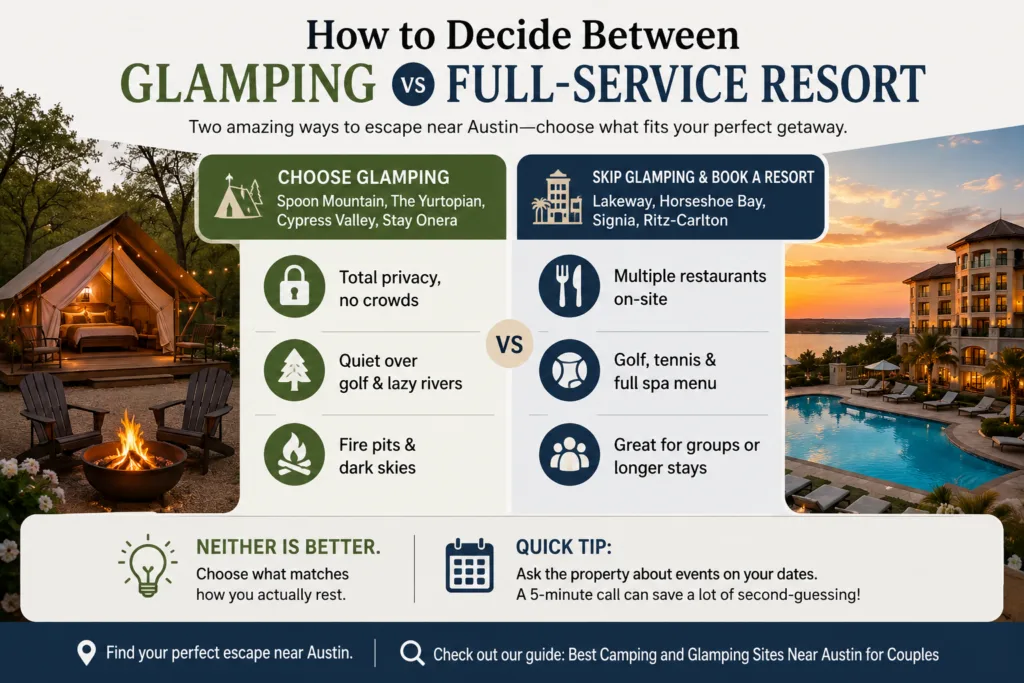
We get asked this constantly, so here’s the honest breakdown we give guests trying to choose between an intimate glamping stay and a bigger resort.
If you already know you want an outdoor escape, you can dive straight into our curated list of the Best Camping and Glamping Sites Near Austin for Couples.
Choose glamping (Spoon Mountain, The Yurtopian, Cypress Valley, Stay Onera) if:
- You want total privacy, not shared pool decks or hotel hallways
- Quiet matters more to you than a golf course or a lazy river
- You’d rather have a fire pit and dark skies than a lobby bar
This secluded environment makes the glamping experience especially popular for couples looking for peaceful Romantic Retreats for New Parents Near Austin, where they can genuinely unplug and rest without the distractions of a massive hotel footprint.
Skip glamping and book a resort (Lakeway, Horseshoe Bay, Signia, Ritz-Carlton) if:
- You want multiple restaurants on-site instead of driving to dinner
- Golf, tennis, or a full spa menu matters to your weekend
- You’re traveling with another couple or extending the trip past two nights
Neither option is better. We just want you to book the one that matches how you actually rest.
We’ll also say this plainly: couples sometimes book based on photos alone, then feel a little let down when a “romantic resort” turns out to be full of golf tournaments and family reunions on a given weekend.
Ask the property directly what’s on the events calendar for your dates. A five-minute phone call saves a lot of second-guessing once you’ve already checked in.
What a Romantic Weekend Near Austin Actually Costs
Money conversations shouldn’t feel awkward, so here’s the real range we see guests spend, based on a two-night stay.
| Category | Budget Weekend | Mid-Range Weekend | Premium Weekend |
| Lodging (2 nights) | $360 to $600 | $600 to $1,000 | $1,000 to $2,400 |
| Food and wine | $150 to $250 | $250 to $400 | $400 to $600 |
| Activities | $0 to $80 | $80 to $200 | $200 to $500 |
| Estimated total | $510 to $930 | $930 to $1,600 | $1,600 to $3,500 |
These are estimates, not guarantees, and they’ll shift with the season and how far in advance you book.
Local Expertise: What Nobody Tells You Before You Go On A Romantic Weekend Getaway

A romantic weekend is about more than booking a beautiful stay, and these insider tips can help you make the most of every moment.
- Parking reality check: Wimberley’s town square gets tight on weekends, especially during Market Days on Saturdays.
Most glamping properties, including ours, offer dedicated parking on-site, so the tighter squeeze only shows up if you’re driving into town for dinner or shopping.
- Before you book any of these stays, confirm cancellation policies directly with the property.
Weather in the Hill Country shifts fast, and glamping properties in particular vary widely in how flexible they’ll be if a cold front or heavy rain changes your plans.
- What we tell our guests about pacing: don’t schedule every hour. The couples who come back and tell us they had the best weekend of the year are almost always the ones who left one afternoon completely open, with nowhere to be and nothing booked.
- Whether you are planning a milestone birthday weekend getaway near Austin or just a simple escape from the city, permitting yourselves to slow down is what transforms a standard trip into something memorable.
- What visitors often don’t realize about Hill Country distances: the mileage on a map understates the drive.
- These are two-lane farm roads with plenty of curves, not highways, so a “40-minute” trip can stretch to 55 minutes if you’re behind a slower vehicle on Ranch Road 12 or FM 165.
Build a little cushion into check-in time, especially if you’re arriving after dark in winter.
Find the Romantic Getaway That Fits Your Love Story
Ten stays, four seasons, and one honest takeaway: the best romantic weekend getaways near Austin work because they match the season and the mood you’re actually in, not the one you think you’re supposed to want.
Glamping earns its reputation in winter and spring when fire pits and dark skies do the heavy lifting. Lakeside resorts take over once summer heat rolls in and water becomes the whole plan.
If quiet, privacy, and a fire pit under real stars sound like your weekend, we’d love to host you at Spoon Mountain Glamping in Wimberley. Book direct at Spoon Mountain Glamping, call us at 737-227-0881.
FAQs | Romantic Weekend Getaways Near Austin
1. What is the most romantic weekend getaway near Austin for couples on a budget?
Green Acres in Elgin and Lucky Arrow Retreat in Dripping Springs both offer nightly rates under $300 while still delivering a genuine escape from the city.
2. How far in advance should we book a romantic weekend getaway near Austin?
For peak weekends in spring and fall, book 4 to 6 weeks ahead. Winter and summer weekdays often have more last-minute availability.
3. Is Wimberley or Fredericksburg better for a couples’ weekend?
Wimberley is closer at 45 minutes and leans quieter and more intimate. Fredericksburg is farther at 1.5 to 2 hours but adds wine country and more dining variety.
4. What’s the best season for a romantic getaway near Austin?
Winter suits fire pits and stargazing, spring suits wildflower drives and wineries, summer suits lake days, and fall suits foliage and cooler evenings. Each season genuinely changes the experience.
5. Are glamping stays near Austin worth it compared to a hotel?
For couples who value privacy and quiet over hotel amenities, yes. Properties like Spoon Mountain Glamping include private pools and soaking tubs that most hotels can’t match.
6. What should we pack for a Hill Country romantic weekend?
Layers for cool evenings, comfortable walking shoes, swimwear if visiting a lake or spring-fed pool, and something nice for dinner reservations.
7. Can we do a last-minute weekend getaway from Austin without planning weeks ahead?
Yes, particularly midweek. Lakeway Resort and Horseshoe Bay tend to have more short-notice availability than smaller glamping properties with only a few units.
8. Is Horseshoe Bay Resort good for a romantic couples trip?
It works well for couples who want golf, a marina, and resort amenities, though it leans family-friendly on busy weekends. For a quieter setting, glamping stays like Spoon Mountain suit couples better.
9. How much should we budget for a romantic weekend near Austin?
Plan on $500 to $900 for a budget-conscious two-night trip, or $1,600 and up for a premium weekend with spa treatments and fine dining.
10. What makes Spoon Mountain Glamping different from other stays near Austin?
Each of our three tents has its own private pool, a soaking tub for two, and a king bed, and the property is adults-only. We’re about 45 minutes from Austin at 210 Masonic Lodge Rd in Wimberley.
11. When is the best time to see wildflowers on a road trip near Austin?
Bluebonnets typically peak from late March through mid-April. Ranch Road 12, the Devil’s Backbone (RR-32), and the Willow City Loop near Fredericksburg are among the most scenic couples’ drives during bloom—go on a weekday to avoid crowds.
12. Where can couples find a truly quiet getaway near Austin?
Adults-only glamping like Spoon Mountain keeps the whole property calm, while The Yurtopian and Cypress Valley offer private outdoor tubs out of other guests’ sightlines. Book midweek for the quietest experience.
Sources Consulted:
- Official property websites for The Yurtopian, Cypress Valley Treehouses, Lucky Arrow Retreat, Stay Onera, Lakeway Resort and Spa, Horseshoe Bay Resort, Signia by Hilton La Cantera, and The Ritz-Carlton Dallas, Las Colinas
- Google Reviews
- Tripadvisor
- Yelp
- Expedia and Hotels.com listings
- Reddit travel discussions, including r/Austin and r/travel
- Our team’s direct operational experience managing stays in the Wimberley area