

The Lyndon Baines Johnson Presidential Library and Museum stands as one of Austin’s most intellectually rich and emotionally layered landmarks. Located on the University of Texas campus, this monumental space offers far more than a history of politics. It presents a deeply human portrait of power, progress, contradiction, and legacy.
During a recent trip to Austin, visiting the LBJ Library felt less like walking through a museum and more like stepping into the inner workings of twentieth-century America. Every floor reveals how one presidency shaped civil rights, space exploration, domestic reform, and global conflict.
With nearly 125,000 visitors each year, the ten-storey structure draws historians, students, and curious travelers alike. Its scale is imposing, yet its exhibits are personal, reflective, and often surprisingly intimate.
This guide explores the LBJ Presidential Library in detail, drawing directly from on-site exhibits and visitor experience, while also covering practical travel information, costs, food options, and nearby stays to help you plan a meaningful visit.
About the LBJ Presidential Library and Museum in Austin
The LBJ Presidential Library was planned soon after Lyndon B Johnson’s landslide victory in the 1964 election. Unlike most presidential libraries, which are privately funded, this library was largely financed by the University of Texas. The university contributed fifteen million dollars of the total eighteen million dollar cost and donated the land on which the building stands.

Construction began in 1967 under the guidance of First Lady Lady Bird Johnson, who worked closely with architects to shape the building’s design. The library was officially dedicated on May 22, 1971, with President Richard Nixon, Reverend Billy Graham, and President Johnson himself in attendance.
There is historical irony tied to the land itself. The site was once a low-income neighborhood acquired by the university through eminent domain proceedings. This fact adds another layer of complexity to the legacy of a president remembered for his War on Poverty initiatives.
What to Expect When You Enter the LBJ Presidential Library
Visitors are first greeted by a life-size bronze statue of Lyndon B Johnson. The tone is immediately set as commanding, reflective, and grounded in realism rather than grandeur.
One of the earliest displays features the presidential limousine used by Johnson beginning in 1968, the final full year of his presidency. The presidential seal on the doors stands out as a powerful symbol of authority.
Johnson served as president from November 22, 1963, to January 20, 1969. During this period, he signed hundreds of bills using a ceremonial pen,s which were often gifted to sponsoring legislators. Several of these pens are displayed, each representing landmark legislation.
Lady Bird Johnson Exhibits: Personal Life and Legacy
One of the most moving sections of the museum focuses on Claudia Alta Taylor, known to history as Lady Bird Johnson. A rarely seen photograph shows her as an infant in the arms of her Black nanny, Alice Tittle, offering insight into early twentieth century Texas social realities.
Born in 1912 into a wealthy family in Karnack, Texas, Lady Bird was surrounded by privilege, yet her life reflected strong environmental and civic commitment. Letters from her father reveal that she never truly liked the nickname Lady Bird, despite it becoming her public identity.
Another standout exhibit is the Bell and Howell camera Lady Bird used to record private family moments. These home movies play throughout the gallery, showing life at the LBJ Ranch and offering an unfiltered look into the Johnson family’s personal world.
Lyndon B. Johnson’s Political Rise and Campaign History
The museum displays Johnson’s early political journey in meticulous detail. A 1937 campaign flyer from his first run for Congress is on view, along with documents showing his appointment as legislative secretary to Congressman Richard Kleberg.
Campaign posters, event notices from Lockhart, Texas, and original correspondence illustrate how Johnson built his political machine long before the presidency. These artifacts help visitors understand his mastery of legislative negotiation and political persuasion.
An engaging interactive exhibit allows visitors to experience the so-called Johnson Treatment. This was his famously intimidating method of persuasion, where he leaned physically close to overwhelm opponents. The exhibit adds humor while explaining a very real political tactic.
Also, discover Five Mile Dam Park in San Marcos, Texas, with this 2026 travel guide.
November 22, 1963: JFK Assassination and LBJ’s Presidency
One of the most somber sections addresses the assassination of President John F Kennedy. Displays include the clothing worn by Vice President Johnson and Lady Bird Johnson on that day, accompanied by audio recollections from Lady Bird herself.
The museum does not sensationalize the tragedy. Instead, it contextualizes the moment as a turning point that thrust Johnson into the presidency under unimaginable circumstances.
The very hall where Johnson’s body lay in repose after his death in January 1973 is preserved within the museum. Following Lady Bird Johnson’s death in 2007, her body also lay in repose here, reinforcing the library’s role as both a public institution and a deeply personal memorial.
Inside the LBJ Presidency: Exhibits, Policies, and Culture
The presidential floors include artifacts ranging from a moon rock collected during Apollo 15 in 1971 to cultural displays showcasing magazines, movies, fashion, and household items of the era.
The Great Society programs are addressed through legislation displays, audiovisual presentations, and signed bills. While the Vietnam War receives comparatively limited physical space, its presence is felt through context rather than spectacle.
Johnson’s personal items, including his well-worn boots, which traveled everywhere from Vietnam to Australia, reflect a man constantly in motion. A replica of the Oval Office allows visitors to stand inside a meticulously recreated seat of power.
LBJ Presidential Library Visitor Information
LBJ Presidential Library Location and How to Get There
| Detail | Information |
| Address | 2313 Red River Street, Austin, Texas |
| Distance from Downtown Austin | Approximately 2 miles |
| Nearest Airport | Austin Bergstrom International Airport |
| Distance from Airport | Around 10 miles |
LBJ Presidential Library Tickets, Hours, and Entry Fees
| Category | Cost |
| Adults | Free |
| Children | Free |
| Students | Free |
| Seniors | Free |
| Timings | Details |
| Open Days | Tuesday to Sunday |
| Closed | Mondays and major holidays |
| Average Visit Duration | 2 to 3 hours |
Accessibility, Facilities, and Visitor Amenities
• Fully wheelchair accessible building
• On-site museum store
• Clean restrooms on multiple floors
• Elevators connecting all exhibits
• Outdoor terrace views of the Austin skyline and the Texas State Capitol
Best Places to Eat Near the LBJ Presidential Library
• University of Texas campus cafes within walking distance
• Coffee shops along Red River Street
• Food trucks and casual dining on Guadalupe Street
• Fine dining options in downtown Austin are a short drive away
Nearby Attractions to Combine with Your Visit
• University of Texas campus walk
• Blanton Museum of Art
• Texas State Capitol
• Lady Bird Lake trails
• Bullock Texas State History Museum
Where to Stay Near the LBJ Library
Spoon Mountain Glamping Austin
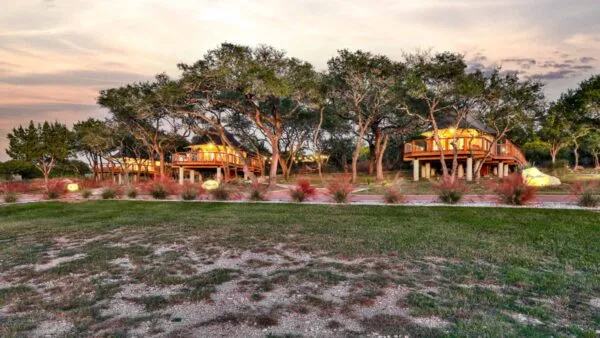
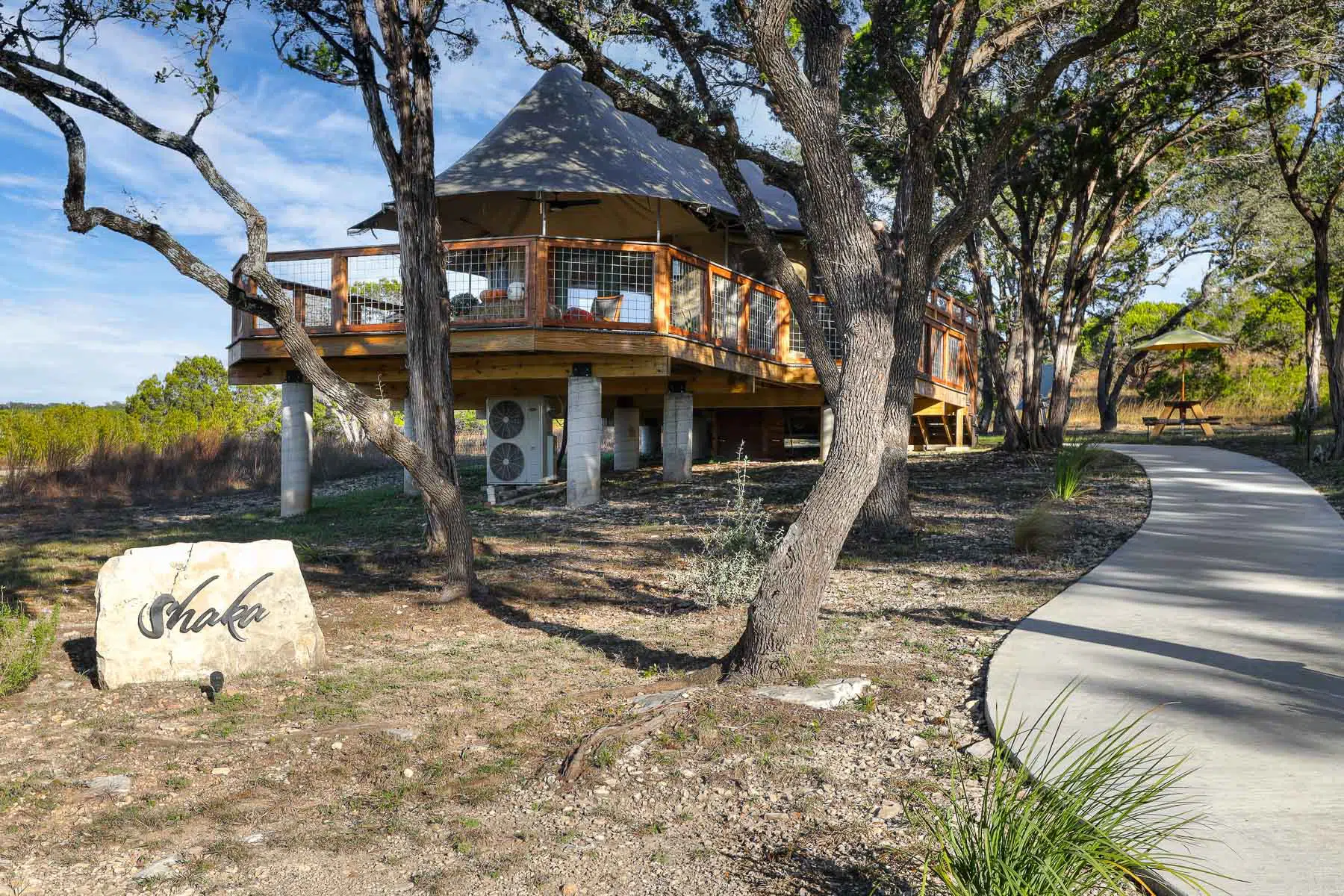
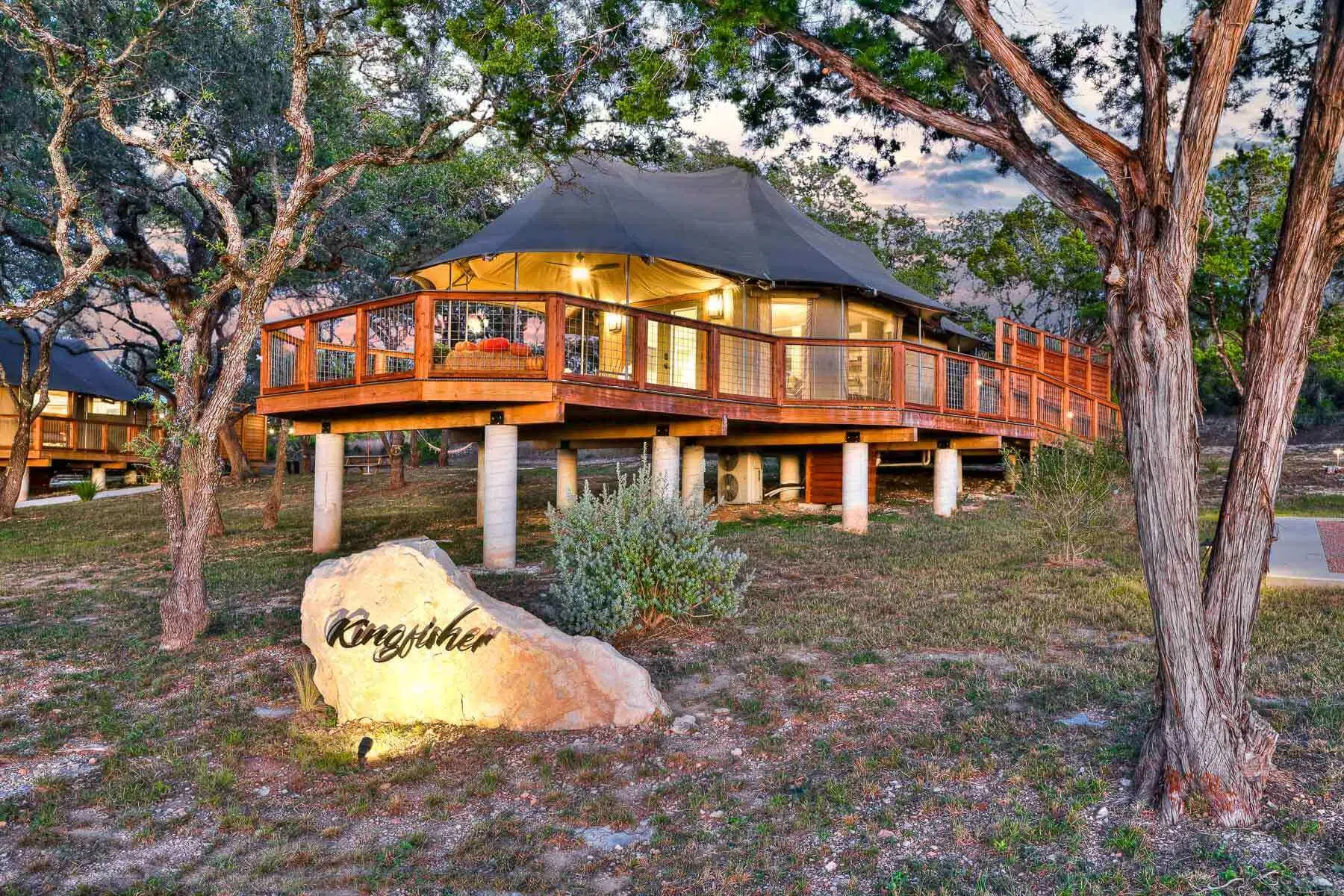
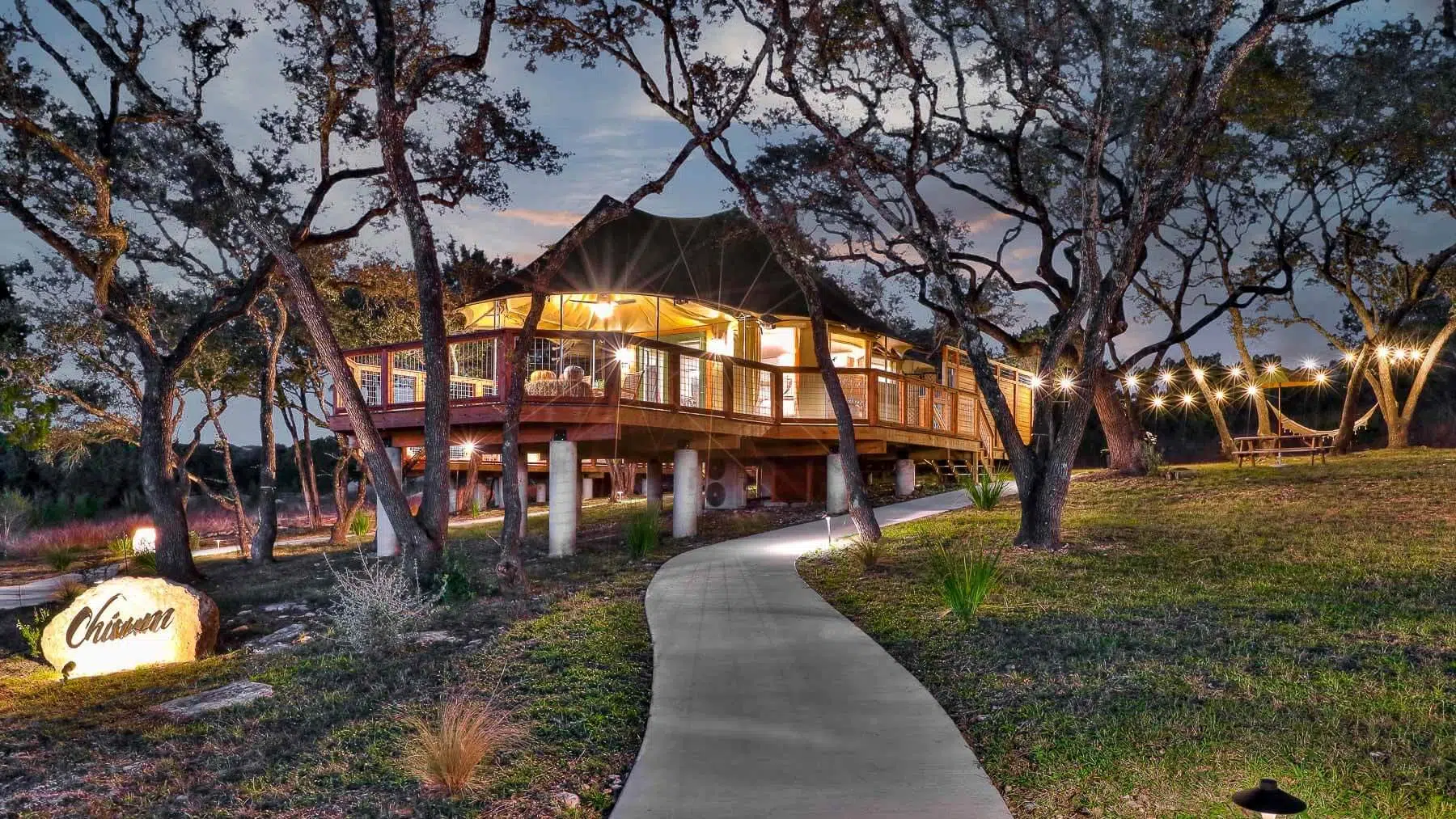
Spoon Mountain Glamping is a thoughtfully designed nature stay that blends outdoor living with comfort, making it an excellent option for travelers who want a scenic escape without sacrificing convenience. Tucked into the Texas Hill Country, this glamping retreat offers a peaceful atmosphere that contrasts beautifully with the structured, intellectual experience of visiting the LBJ Presidential Library.
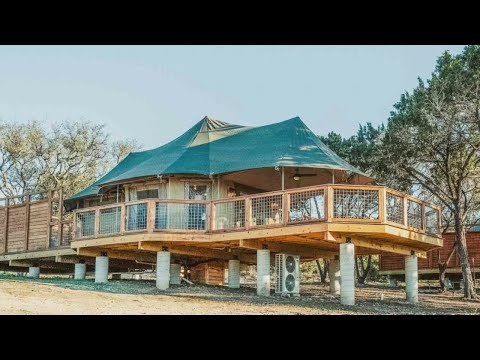
The property features well-spaced glamping units surrounded by native trees, open skies and quiet trails. Each unit is designed to provide privacy while still feeling connected to nature. Interiors are warm and minimal, often including comfortable beds, seating areas, electricity, and climate control, depending on the unit type. Outdoor decks or seating spaces allow guests to unwind in the evenings, making it a popular choice for couples and solo travelers.
A note from your hosts
Come stay with us at Spoon Mountain
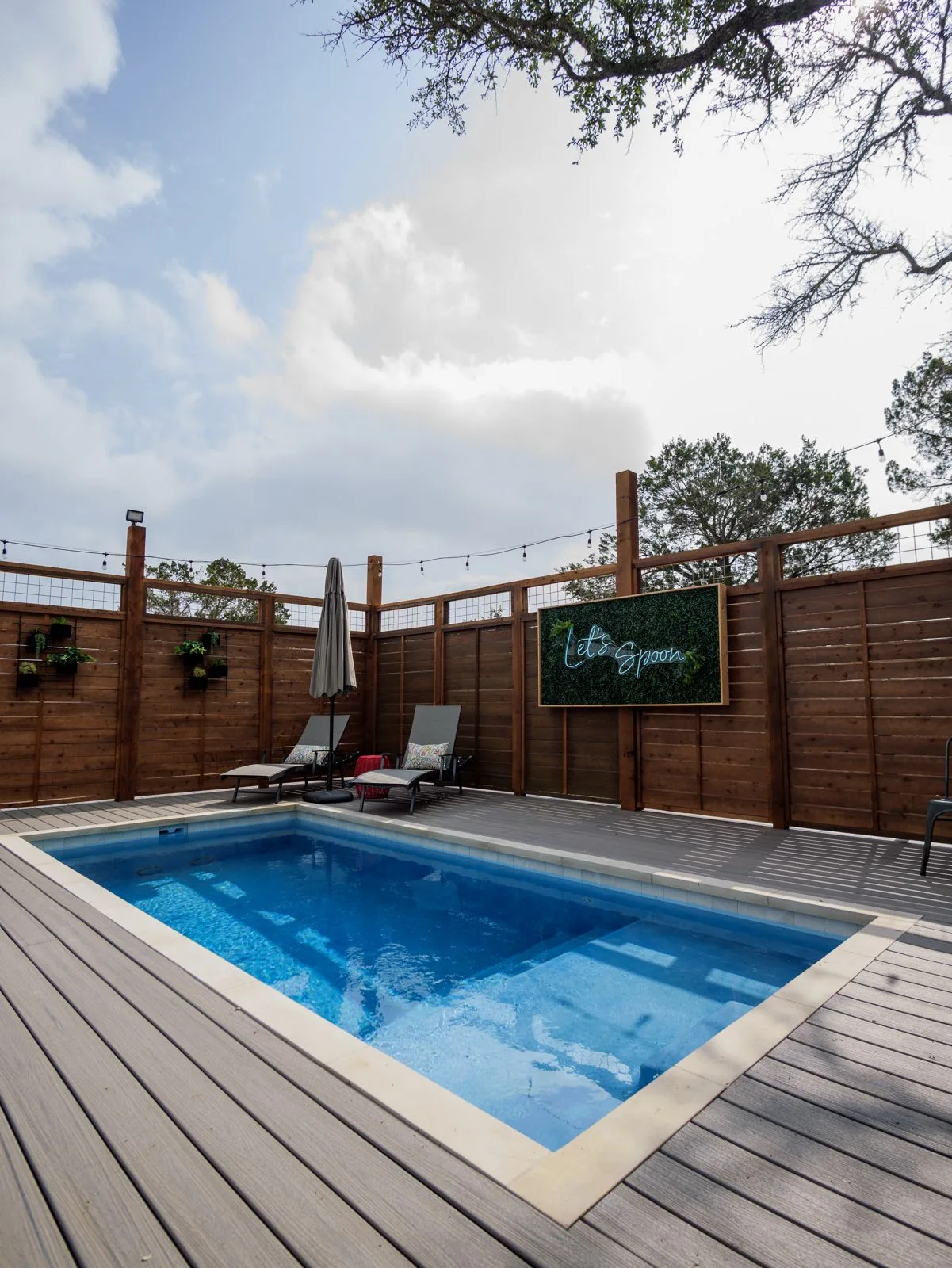
Hi, we're Yvette & Ken. We built Spoon Mountain as a romantic hilltop escape 30 miles from Austin. Each of our three safari tents has a private pool, soaking tub for two, and king bed. Adults only. We'd love to host you.
Spoon Mountain Glamping is especially suitable for short weekend trips, slow mornings and relaxed evenings. After a day spent walking through museum floors and historic exhibits, the calm environment here helps visitors decompress and reflect.
Discover the ultimate romantic checklist ideas for Spoon Mountain Glamping
Spoon Mountain Glamping Travel Details
| Category | Information |
| Distance from LBJ Library | Approximately 35 to 45 minutes by car |
| Approximate Distance | Around 22 to 28 miles |
| Best Mode of Transport | Private car or cab |
| Stay Type | Glamping tents and cabins |
| Ideal For | Mid-range varies by season and unit type |
| Price Range | Some units offer basic kitchenettes, while nearby dining requires driving |
| Nearby Activities | Nature walks, stargazing, quiet reading time |
| Food Facilities | Some units offer basic kitchenettes nearby dining requires driving |
| Best Time to Stay | Spring and fall for pleasant weather |
| Parking | On-site parking available |
Boutique Hotels in Downtown Austin
Boutique hotels in downtown Austin are ideal for visitors who want to stay close to the LBJ Library while also enjoying Austin’s nightlife and dining scene. These hotels typically offer stylish interiors, smaller room counts, and personalized service. Most are within a ten to fifteen-minute drive from the museum, making them convenient for early visits.
They are well-suited for travelers who prefer urban comfort, easy access to cafes and restaurants and walkable neighborhoods.
University Area Guesthouses
Guesthouses and short-term rentals around the University of Texas campus are among the most budget-friendly options near the LBJ Library. Many of these stays are within walking distance or a very short drive from the museum, which is ideal for students, researchers, and solo travelers.
These accommodations usually offer simple rooms, basic amenities, and a quieter atmosphere compared to downtown hotels. Their biggest advantage is proximity, allowing guests to explore the library and campus without relying heavily on transport.
Choosing the Right Stay
If your visit to the LBJ Library is part of a reflective, slow-paced Austin trip, Spoon Mountain Glamping offers the best balance between nature and comfort. For those prioritizing convenience and city life, downtown boutique hotels are ideal. University area guesthouses work best for short stays focused primarily on the museum and nearby academic landmarks.
Each option caters to a different travel style, allowing you to tailor your stay based on pace, budget, and overall Austin itinerary.
San Marcos Plaza Park in San Marcos, TX—discover history, events, art, nearby food, parking, and best times to visit with
LBJ Presidential Travel Tips for Visitors
• Visit early in the day to avoid school group crowds
• Allocate time for audiovisual exhibits and recordings
• Combine your visit with a walk through the UT campus
• Photography is allowed in most areas without flash
• Comfortable shoes are recommended due to multiple floors
Why the LBJ Presidential Library Is a Must-Visit for Couple Travellers
For couples, the LBJ Presidential Library and Museum offers a rare blend of quiet intimacy and shared discovery. Unlike loud tourist attractions, the museum encourages slow walking, thoughtful conversations, and reflective moments that naturally bring partners closer. Exploring history together creates space for meaningful discussions about values, leadership, and social change.
The architecture itself sets a calm and contemplative tone. The towering travertine structure, soft natural light, and panoramic terrace views over Austin create moments where couples can pause, reflect, and simply enjoy being present together. The outdoor terrace, in particular, is ideal for quiet conversations with a scenic backdrop.
Many exhibits focus on personal stories rather than just political achievements. Lady Bird Johnson’s home videos, handwritten letters, and family photographs allow couples to connect emotionally with the human side of history. These intimate details feel personal rather than academic.
The museum also pairs well with romantic itineraries. Couples can combine a morning at the library with a campus walk, lunch near Lady Bird Lake, or an evening drive toward Hill Country stays. It is an experience that feels enriching without being exhausting, making it perfect for couples who enjoy meaningful travel.
FAQs | LBJ Presidential Library and Museum
1. What makes the LBJ Library suitable for couples?
The museum’s quiet atmosphere, emotionally rich exhibits, and scenic terrace views make it ideal for couples who enjoy slow, thoughtful experiences together.
2. Is the LBJ Library too academic for casual visitors?
No, the exhibits use storytelling, visuals, and multimedia displays that keep the experience engaging even for visitors without a background in history or politics.
3. How long should couples plan to spend at the museum?
Most couples spend around two to three hours exploring the exhibits comfortably without feeling rushed or overwhelmed.
4. Are there romantic spots inside or near the library?
Yes, the outdoor terrace overlooking Austin and the University of Texas campus offers peaceful views that couples often find memorable.
5. Can the LBJ Library be part of a romantic Austin itinerary?
Absolutely, it pairs well with campus walks, lakeside strolls, downtown dining and Hill Country getaways for a well-rounded romantic day.
6. Is photography allowed inside the museum?
Photography is allowed in most areas without flash, allowing couples to capture quiet moments and meaningful details.
7. Is the museum crowded on weekends?
Weekends may see more visitors, but the museum’s spacious design prevents it from feeling cramped or stressful.
8. Do couples need to book tickets in advance?
No advance booking is usually required since entry is free, though checking official hours before visiting is recommended.
9. Is the LBJ Library accessible to all visitors?
Yes, the museum is fully accessible with elevators, seating areas, and wheelchair friendly pathways throughout.
10. What is the best time of day for couples to visit?
Late mornings and early afternoons are ideal for a relaxed experience, while late afternoon visits offer beautiful light on the terrace.